
ADA-Compliant Signs for Healthcare in 2026: What Every Arizona Practice Needs to Know
Click here to listen to this week’s podcast!

ADA-Compliant Signs for Healthcare in 2026: What Every Arizona Practice Needs to Know
As medical offices across the Valley finalize 2026 budgets this December and January, one line item keeps climbing to the top of the list: ADA accessibility upgrades, especially signage.
Whether you run a busy Mesa urgent care, a Scottsdale dermatology clinic, a Tempe pediatric office, or a large Phoenix health system, staying ahead of federal and local requirements has never been more important.
At Phoenix Sign Studio, we’ve partnered with medical and dental practices across Arizona to improve clarity, support patient experience, and bring signage into full ADA compliance with durable, custom solutions built for the desert climate.
Here’s the no-fluff, 100% accurate guide to what’s required and what’s changing in 2026.
Why 2026 Is a Make-or-Break Year for Arizona Healthcare Accessibility
Two major ADA deadlines converge in 2026, driving a wave of upgrades across the state:
- August 9, 2026: Public entities (county hospitals, public health clinics, university medical centers) must have accessible medical diagnostic equipment (MDE) fully in place. That means new directional signs pointing patients to height-adjustable exam tables, wheelchair-accessible scales, and patient lifts.
- April 2026: DOJ Title II final rule requires state and local government websites and mobile apps (including many hospital systems) to meet WCAG 2.1 AA. Large health networks are bundling digital-accessibility projects with physical signage refreshes right now to save time and money.
Private practices aren’t directly subject to these dates, but Arizona saw record ADA Title III lawsuits in 2024–2025, many triggered by outdated or missing signage. First violation fines start at $75,000.

Exact ADA Signage Requirements That Apply Today (2010 Standards, Still in Full Force)
| Sign Type | Tactile + Braille Required? | Key Specs & Placement | Typical Use in Clinics & Hospitals |
|---|---|---|---|
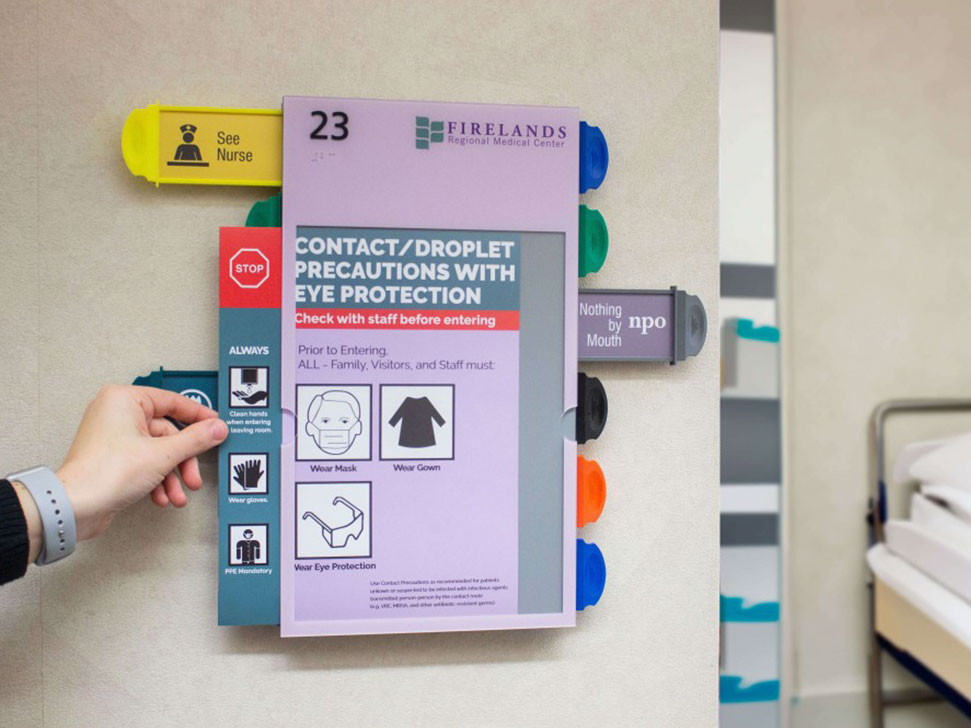
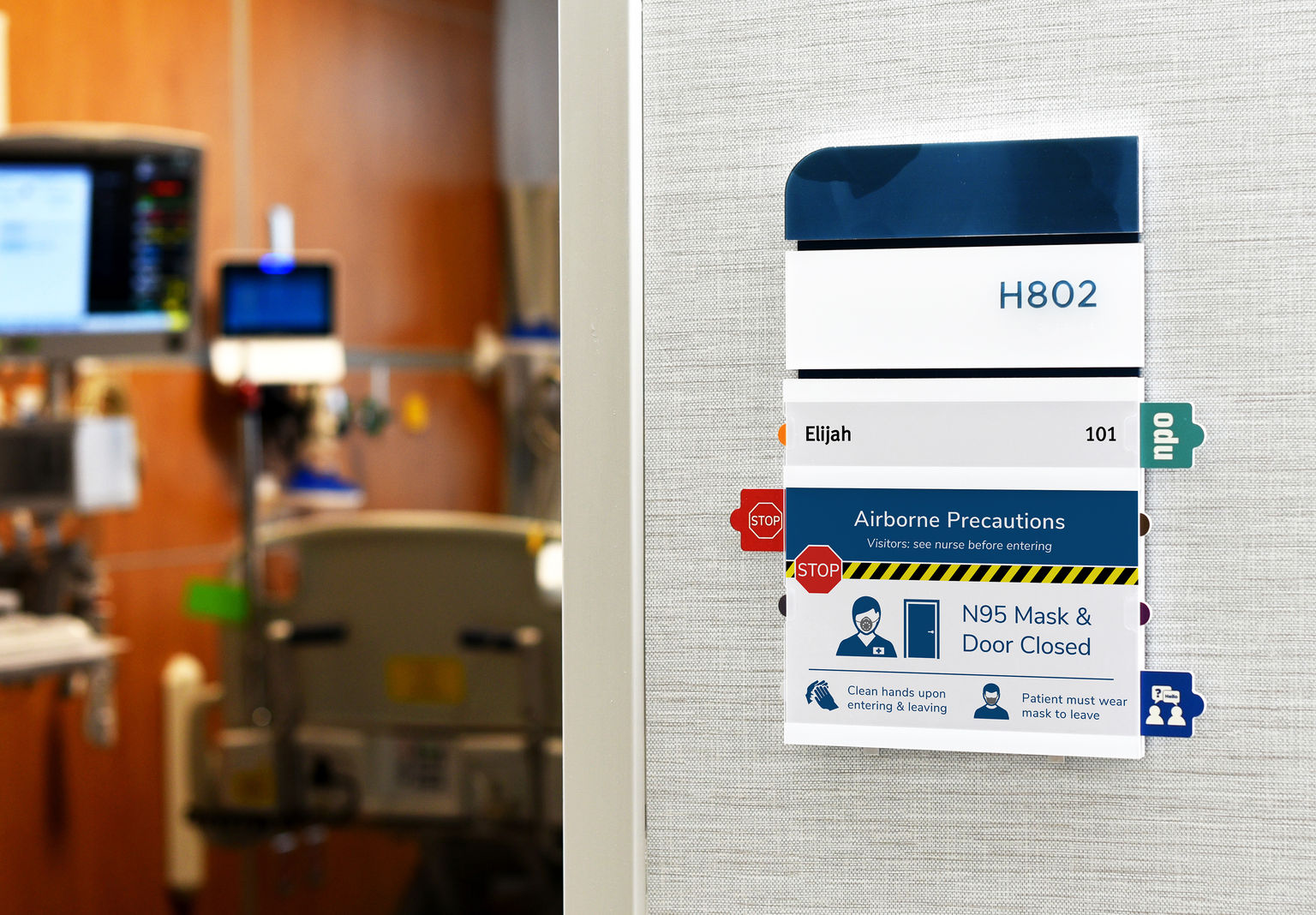
| Permanent Room IDs | Yes | Raised 1/32", Grade 2 Braille, 48–60" to centerline | Exam rooms, radiology, labs, pharmacy windows |
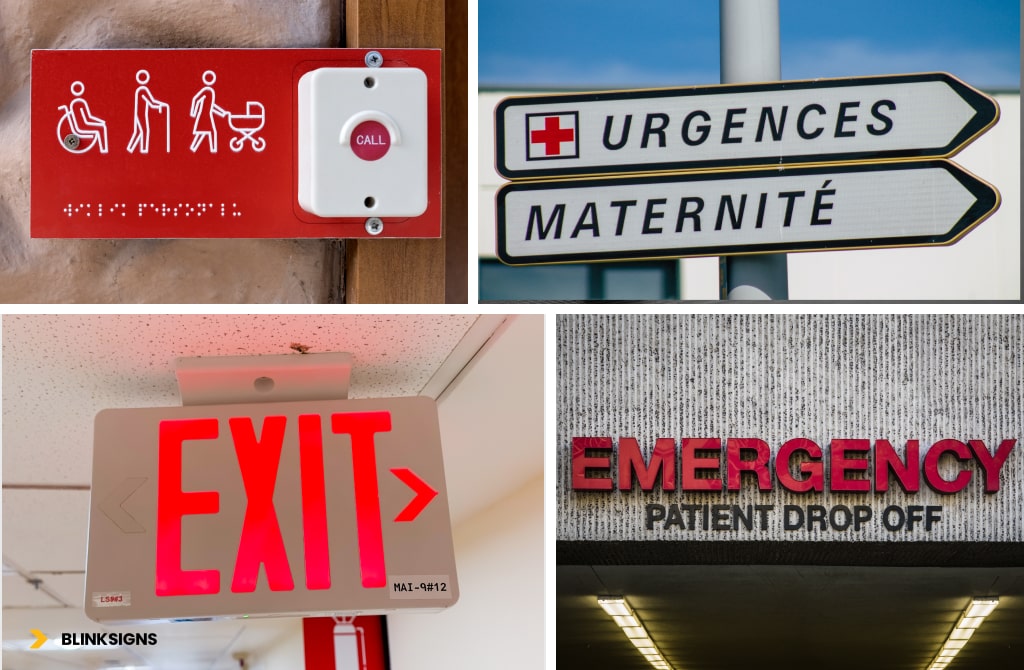
| Directional / Informational | No | Min. 5/8" visual characters, high contrast | “Accessible Restroom →”, “Mammography This Way” |
| Accessibility Symbols (ISA) | No | 6" × 6" field, white symbol on blue background | Parking, entrances, restrooms, exam tables |
| Exit Signs | Yes at exit doors | Tactile letters + illuminated where code requires | Emergency exits, stairwells |
All tactile text must be sans-serif, uppercase, with proper stroke thickness and contracted Grade 2 Braille directly below.
Arizona & Valley-Specific Details
- Arizona has no state additions or deviations from the 2010 ADA signage standards.
- Maricopa County and City of Phoenix require van-accessible parking signs to list the $250–$500 state fine.
- Our intense UV fades cheap signs in months; always choose photopolymer, etched metal, or UV-stable acrylic.
Your Simple 2026 Compliance Checklist
- Audit every permanent room sign for proper height, contrast, raised text, and Grade 2 Braille.
- Add or update directional signs to new accessible exam rooms, scales, and lifts.
- Refresh exterior parking and entrance signage with current fine amounts.
- If you’re part of a hospital system, align physical signage upgrades with your 2026 digital accessibility project.
Most Valley practices spend $2,000–$8,000 to bring an entire facility up to code, far less than even one lawsuit settlement.
Frequently Asked Questions
Q: Are there brand-new ADA signage rules coming in 2026?
A: No. Physical signage still follows the 2010 Standards. The 2026 deadlines affect medical equipment and government websites, but they’re driving widespread signage refreshes at the same time.
Q: Do “Wet Floor” or “Staff Only” signs need Braille?
A: No, only permanent room/space identifiers require tactile characters and Braille.
Q: How much should I budget for ADA signs in the Phoenix area?
A: Individual interior signs run $120–$225. Full clinic packages typically save 25–35%.
Q: Can digital screens replace physical ADA signs?
A: Not for tactile/Braille requirements. Digital wayfinding is a great supplement, especially for large hospitals updating both digital and physical accessibility in 2026.
Ready to knock this off your 2026 to-do list without the stress?
Book your free 15-minute compliance review + on-site signage audit today:
https://calendly.com/ken-phoenixsignstudio
We design, fabricate, permit, and install everything with materials proven to survive Arizona summers. Let’s get your practice 100% compliant before the new-year patient surge hits.